Soham Petkar

I am a Research Fellow at Sarvam AI, working on foundation models.

My past research focuses on efficient pre-training and evaluation of graph-language multimodal models, alongside exploring interpretability and alignment in real-world scenarios using the linear representation hypothesis.

Topics that intrigue me include mechanistic interpretability, alignment, graph-language modeling, deterministic & stochastic reasoning mechanisms, or anything that imparts tacit knowledge to models.

Email  /  GitHub  /  Google Scholar  /  ORCID  /  LinkedIn  /  X  /  LessWrong

profile photo

My research focuses on foundation models, graph-language multimodal models, interpretability, and alignment.
(* = equal contribution)

paper image

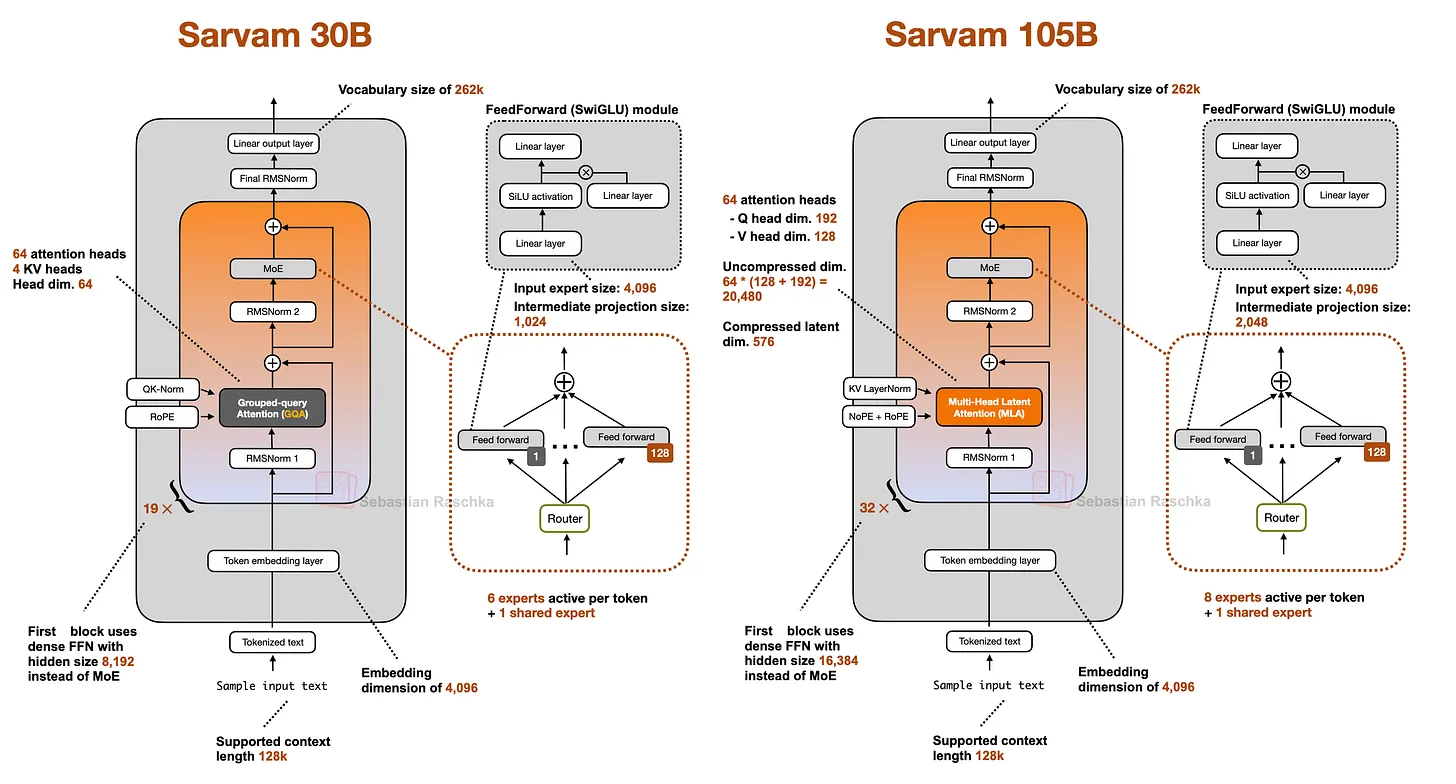
Sarvam 30B and 105B: Open-Source Reasoning LLMs Trained from Scratch in India


Soham Petkar and 14 other researchers at Sarvam AI
Sarvam AI, 2026
report / model (30B) / model (105B) /

Sarvam 30B and 105B are Mixture-of-Experts reasoning models trained from scratch on large-scale, high-quality datasets. Both achieve state-of-the-art results on Indian language benchmarks and are competitive with frontier models on reasoning, coding, and agentic tasks. Open-sourced under Apache 2.0.

paper image

A Graph Talks, But Who's Listening? Rethinking Evaluations for Graph-Language Models


Soham Petkar*, Hari Aakash K*, Anirudh Vempati, Akshit Sinha, Ponnurangam Kumaraguru, Chirag Agarwal
NeurIPS NPGML Workshop, 2025
arxiv / paper / code /

We present a comprehensive rethinking of evaluation methodologies for graph-language models, proposing new benchmarks and evaluation strategies that better capture the true capabilities of these multimodal systems.

paper image

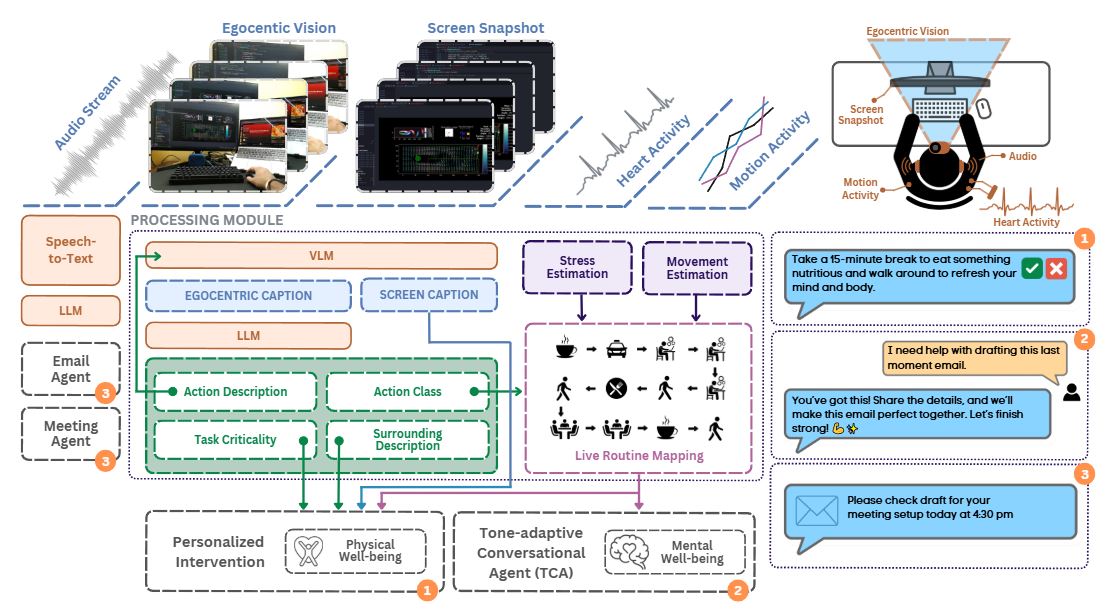
AdaptAI: A Personalized Solution to Sense Your Stress, Fix Your Mess, and Boost Productivity


Soham Petkar*, Rushiraj Gadhvi*, Priyansh Desai*, Sidhharth et al.
CHI LBW, 2025
arxiv / paper /

AdaptAI is a multimodal AI system that enhances productivity and well-being by tailoring interventions to individual needs, integrating egocentric vision, audio, physiological signals, and LLM-driven workflows.

A selection of my projects spanning deep learning, computer vision, quantum ML, and more.

project image

AdaptAI: A Personalized Solution to Sense Your Stress, Fix Your Mess, and Boost Productivity


AdaptAI is a multimodal AI system that enhances productivity and well-being by tailoring interventions to individual needs. Unlike generic tools, AdaptAI integrates egocentric vision, audio, physiological signals, and LLM-driven workflows to provide context-aware support. Its Tone-Adaptive Conversational Agent enhances productivity by adjusting responses to be more positive and supportive during stressful moments.
code /
HCI Research
project image

KhalasiIO: Detecting Situational Impairments With Reasoning-based Memory Bank


Detects and addresses temporary impairments caused by environmental factors like noise, lighting, and stress. Integrates wearable devices and contextual memory for personalized, real-time interventions, reducing cognitive load and frustration. Promising results highlight scalability and improved accessibility.
HCI Research
project image

Strong Lensing Classification & Super-Resolution with Masked Autoencoders


Deep learning methods for astrophysics: explored ResNet-18 and Masked Autoencoder (MAE) models for classifying strong gravitational lensing images and enhancing resolution with ESRGAN. Included interpretability experiments with Grad-CAM to analyze model decisions and identify biases. Achieved improved super-resolution with physics-informed insights.
code /
Astrophysics Deep Learning Computer Vision Research
project image

Latent Space Collapse? Understanding the Effects of Narrow Fine-Tuning on LLMs


Explored how narrow fine-tuning reshapes GPT-2's internal representations in a sentiment classification task. Using TransformerLens, we analyzed shifts in activation and embedding spaces, sentiment direction norms, and causal mediation experiments. Key finding: fine-tuning induces 'output squishing,' reducing diversity and potentially harming generalization.
code / paper /
LLMs Representation Learning Fine-Tuning Research
project image

RAG Optimizations with Reinforcement Learning


A novel reinforcement learning-based optimization strategy to improve Retrieval-Augmented Generation (RAG) performance. Evaluates retriever performance across diverse conversational datasets using text analysis metrics, various retrieval techniques, and RL policies such as DQN, PPO, and Multi-Armed Bandits to reduce irrelevant content and improve response quality.
Deep Learning Reinforcement Learning RAG
project image

Quantum Machine Learning Classifiers


Implemented 24 combinations of Feature Maps, Ansatzs, and Optimizers to evaluate the efficacy of quantum kernel-based classifiers. Our best combination — Z-Feature map, EfficientSU2 ansatz, and L_BFGS_B optimizer — outperformed classical SVM across all metrics.
code /
Quantum Machine Learning Research
project image

Visual Embeddings Solving Jigsaw Puzzles


A deep learning model using Graph Neural Networks and Autoencoders for representation learning via jigsaw puzzle paradigms. Introduced a Segmented Flow warp approach, achieving 60% validation accuracy, competing with SOTA methods. Original idea was to devise an efficient pre-training like solving jigsaw, to improve downstream performance in the wild for visual tasks.
code / video / paper /
Deep Learning Computer Vision
project image

ADRENALIN Challenge: Non-Intrusive Load Disaggregation (NILM)


Developed an unsupervised algorithm for predicting heating and cooling loads from main meter readings. Ranked 8th worldwide in the ADRENALIN challenge.
code /
Unsupervised Learning Energy Disaggregation Time-Series Analysis
project image

WeCare: Winner HackPlaksha 24' Healthcare Track


Developed WeCare, a desktop app to monitor slouching and blinking using body keypoint detection via Strided Transformer weights. Alerts users to improve posture and reduce eye strain.
website /
Healthcare HCI Computer Vision
project image

SWaV-Based Clustering for Vehicle RE-Identification


Applied SWaV (Swapping Assignments between Views) clustering to perform vehicle re-identification on the Veri-776 dataset, assigning consistent clusters to the same vehicle across images to improve identification accuracy.
Self-Supervised Learning Computer Vision Clustering

I write about AI, interpretability, and related topics on LessWrong. Below are some of my posts.

June 29, 2024
Exploring how narrow fine-tuning reshapes GPT-2's internal representations, analyzing shifts in activation and embedding spaces, and discovering that fine-tuning induces 'output squishing' that reduces diversity and potentially harms generalization.
Read on LessWrong →

Design and source code from Jon Barron's website